In short:
- Tea tree essential oil is one of the best documented natural antifungals, effective against Candida albicans, Trichophyton and Malassezia.
- Local application 1 pure drop (skin) or diluted at 20 percent (extensive areas, mucous membranes), 2 times a day, for 7 to 14 days for skin and up to 6 months for nails.
- Combine with good hygiene to avoid recurrence: dry damp areas, change socks and towels daily, disinfect shoes and floors.
Tea tree essential oil is one of the most studied naturals for its antifungal action. Several clinical works have confirmed its effectiveness against fungi and yeasts responsible for skin, nail and mucous fungal infections. Still, it must be used at the right dosage, for the right duration and accompanied by targeted hygiene measures. Here is the complete guide to treat a fungal infection with tea tree.
Why Tea Tree Is Effective Against Fungal Infections
Tea tree essential oil (Melaleuca alternifolia) owes its antifungal action mainly to terpinen-4-ol, which represents 35 to 45 percent of its composition. This compound destabilizes the membrane of fungi and yeasts, which blocks their growth and eventually eliminates them.
Susceptible strains to tea tree are numerous:
- Candida albicans: skin, vaginal, oral (thrush) fungal infections
- Trichophyton rubrum and T. mentagrophytes: foot fungus (athlete’s foot) and nail fungus (onychomycosis)
- Malassezia furfur: greasy dandruff, seborrheic dermatitis
- Epidermophyton floccosum: marginal eczema of Hebra (groin fungus)
A clinical study published in the Journal of Family Practice compared a 100 percent tea tree solution to 1 percent clotrimazole on nail fungus, with comparable cure rates after 6 months of application (about 60 percent improved cases). It is one of the essential oils whose antifungal effectiveness is best documented.
How to Apply Tea Tree by Type of Fungal Infection
Localized Skin Fungal Infection (Body, Groin, Fold)
Application is simple:
- Clean the area with warm water and gentle soap
- Dry carefully (fungus loves humidity)
- Place 1 pure drop of tea tree on the fungal area, or diluted at 20 percent (1 drop EO + 4 drops vegetable oil) if the area is extensive or skin is sensitive
- Massage lightly
- Repeat morning and evening for 7 to 14 days
Take a 7-day break if the cure exceeds 2 weeks. Rotation prevents skin sensitization phenomena.
Foot Fungal Infection (Between Toes, Sole)
Athlete’s foot is a stubborn fungal infection that comes back easily. Protocol:
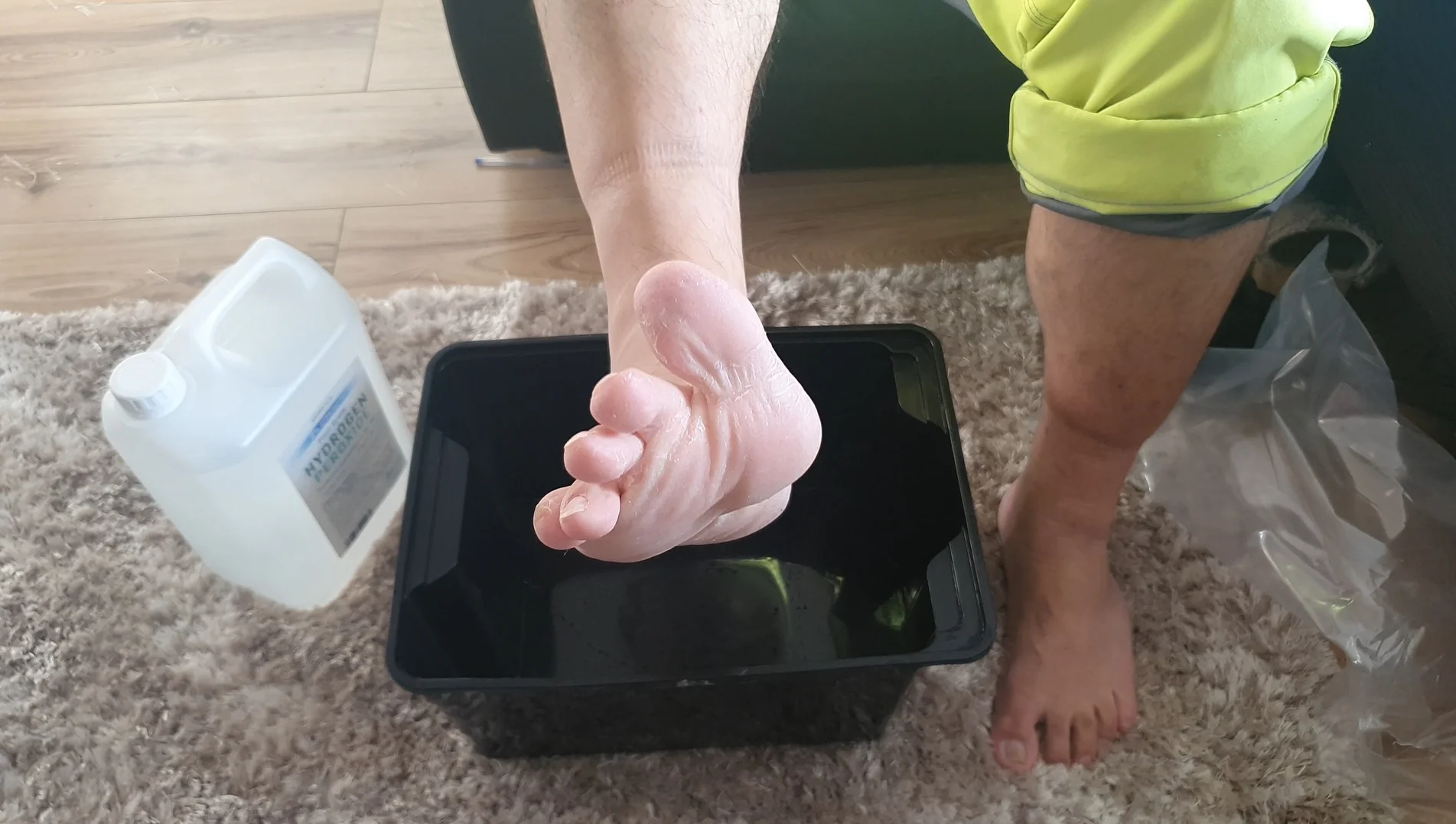
- Daily foot bath in warm water + 5 drops of tea tree in 1 liter of water, 10 minutes
- Careful drying between toes
- Application of 1 drop of tea tree diluted at 20 percent in vegetable oil between toes and on sole
- 2 times a day for 2 to 3 weeks
In parallel, disinfect shoes (tea tree spray + water in a sprayer), wear cotton or wool socks, change shoes every day to let them dry.
Nail Fungal Infection (Onychomycosis)
This is the longest case to treat. The nail is a barrier difficult to penetrate for active ingredients, and healing only becomes visible with nail regrowth (3 to 6 months for hands, 6 to 12 months for feet).
Protocol:
- File the nail to reduce its thickness (very important to facilitate penetration)
- Apply 1 pure drop of tea tree on the nail and around, 2 times a day
- Cover with a bandage at night to promote absorption
- Persevere 3 to 6 months minimum
If no visible improvement after 3 months, or in case of fungus extended to several nails, consult a doctor for oral antifungal treatment.
Vaginal Fungal Infection and Intimate Areas
Sensitive subject that deserves some precautions. Tea tree is never used pure on genital mucous membranes. Two approaches are possible:
In external application (vulvar):
- Dilute 1 mL of tea tree essential oil in 100 mL of gentle intimate gel
- Use this gel for intimate toilet, morning and evening, for 5 to 7 days
- Rinse well
For internal use or in case of confirmed vaginal fungal infection, the advice of a doctor or aromatherapist pharmacist is essential. They can prescribe ovules based on essential oils or direct to classic treatment if necessary.
Note: recurrent vaginal fungal infections require a global assessment (microbiota balance, diet, hygiene). Tea tree alone is not enough in this case, and the background terrain must be worked on, as one would for female hormonal balance.
Oral Fungal Infection (Thrush, Angular Cheilitis)
Tea tree can relieve the start of thrush (white patches on tongue or cheeks) or angular cheilitis (cracked corner of the lips). Application: 1 drop on a cotton swab placed on the area, 2 to 3 times a day, for 5 to 7 days. Do not swallow.
For children or the elderly, always ask the advice of a doctor before any oral use.
Aromatherapy Synergies That Boost the Antifungal Effect
Tea tree works very well alone, but its action can be reinforced by combining it with other antifungal essential oils.
Tea tree + palmarosa (Cymbopogon martinii): flagship duo for recurrent skin fungal infections. Mix equal parts in 20 percent vegetable oil.
Tea tree + true lavender: for fold fungal infections (groin, under breasts, between toes) where irritation is marked. Lavender soothes and accelerates healing.
Tea tree + rose geranium: for fungal infections accompanied by cracks and bleeding. Geranium is healing and mildly hemostatic.
Tea tree + thyme thujanol: synergy particularly active on Candida albicans, to use over 5 to 7 days under professional advice (thujanol is powerful).
A quality vegetable oil like sweet almond or calendula constitutes the best vehicle for these dilutions.
Right Gestures to Avoid Fungal Infection Recurrence
Healing the fungal infection is not enough, the conditions for recurrence must also be eliminated.
Keep areas dry: fungus loves warm humidity. Carefully dry skin folds (toes, groin, under breasts) after showering.
Change contact linens: socks, towels, underwear must be washed at 60 °C minimum. For shoes, alternate pairs to let them dry between wears.
Ventilate and disinfect: spray diluted tea tree in shoes, on bathroom mats, in slippers. Ventilate damp places (bathroom, locker room).
Strengthen immune terrain: a recurrent fungal infection often reflects a fragility of terrain. Probiotic cure, blackcurrant gemmotherapy, diet low in fast sugars that feed yeasts. For repeated candidiasis episodes, see also our article strengthening your immune system naturally.
Precautions to Know
The effectiveness of tea tree should not make us forget its precautions of use. Before any use, imperatively read the guide tea tree essential oil dangers which recalls:
- Contraindications: pregnancy, breastfeeding, child under 3 years old, unbalanced asthma, hormonal disorders
- Skin test in the inner elbow before first prolonged use
- Oral route: not recommended in self-medication
- Limited duration: 7 to 14 days for skin, then break
- Reaction: vegetable oil immediately, no water
In case of extensive, febrile, painful or recurrent fungal infection, or if aromatherapy gives no result after 2 weeks, consult a doctor without delay.