In short:
- Tea tree essential oil is one of the most versatile in aromatherapy: broad-spectrum antibacterial, antifungal, antiviral and immune stimulating.
- Its flagship applications are skin imperfections (acne, pimples), fungal infections (skin, nails), mouth ulcers, hair care and ENT sphere.
- Use diluted at 10 to 20 percent in vegetable oil and limited in time remains the safest way to benefit from its properties.
Tea tree essential oil, also called tea tree oil (Melaleuca alternifolia), is one of the most used oils in Western aromatherapy. Originally from Australia where Aboriginal people used it for centuries to treat wounds and skin infections, it has established itself as a must-have for natural health kits. Tour of its scientifically documented benefits and concrete uses.
Tea Tree: An Active from the Australian Tea Tree
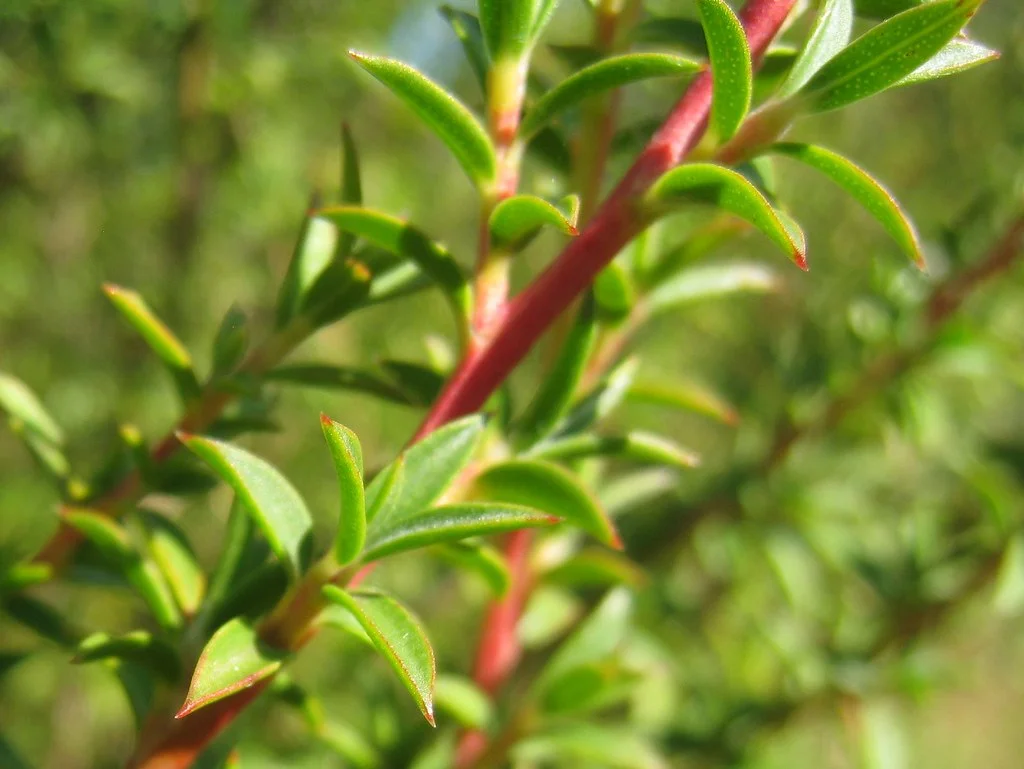
The essential oil is extracted by steam distillation of the leaves and branches of Melaleuca alternifolia, a shrub that grows wild in the coastal swamp region of New South Wales. The name “tea tree” comes from the sailors of the Cook expedition who infused its leaves to prepare an aromatic drink as a replacement for classic tea.
Its aromatic profile is dominated by terpinen-4-ol (35 to 45 percent), the compound that concentrates most of its therapeutic properties. There is also gamma-terpinene, alpha-pinene and 1,8-cineole. This composition makes tea tree one of the most studied essential oils by scientific research, with more than 300 publications on its antimicrobial properties.
Main Benefits of Tea Tree Essential Oil
Broad-Spectrum Antibacterial Action
This is its most documented property. Tea tree is effective against many Gram positive and Gram negative bacteria, including Staphylococcus aureus (including methicillin-resistant strains or MRSA), Escherichia coli, Pseudomonas aeruginosa and Streptococcus pyogenes. This action makes it an ally for cleaning small wounds, acne pimples, skin abscesses or eczema superinfections.
The local application of a diluted drop on a pimple accelerates resorption by limiting bacterial proliferation and inflammation. It is the most emblematic use of tea tree, to the point that it is found in most commercial anti-acne cleansing gels.
Powerful Antifungal Against Fungal Infections
Tea tree is one of the most active essential oils against fungi and yeasts, including:
- Candida albicans, responsible for vaginal and oral fungal infections
- Trichophyton (foot fungus, athlete’s foot, nail fungus or onychomycosis)
- Malassezia furfur, involved in some dandruff and seborrheic dermatitis
On nail fungus, a daily application for several weeks, in addition to a medical consultation, can give interesting results. For foot fungus (between the toes), a 20 percent blend in vegetable oil applied morning and evening for 7 to 10 days is a classic approach in aromatherapy.
Antiviral and Immune Stimulating
By diffusion or application on the chest, tea tree helps to purify the respiratory tract during winter conditions: colds, bronchitis, sinusitis. It works in addition to ravintsara, another major essential oil against ENT infections, and can be used to prepare an immunostimulant synergy during epidemic periods.
Its antiviral action, although less powerful than that of eucalyptus radiata or ravintsara, makes it a useful complement to strengthen the immune system naturally over winter epidemic periods.
Skin Care: Acne, Oily Skin, Imperfections
This is undoubtedly the best-known cosmetic use of tea tree. Its combined antibacterial and anti-inflammatory action makes it a targeted active against juvenile and adult acne. Several clinical studies have compared tea tree at 5 percent to benzoyl peroxide (reference treatment) with comparable results over 8 to 12 weeks, and significantly fewer side effects (irritation, dryness).
In localized care, one drop on a pimple in the evening significantly reduces redness and pimple duration. In routine care, 1 to 2 drops can be integrated into a cleansing gel dose or day cream to apply on greasy areas (T-zone).
Scalp and Hair Care
Tea tree cleans the scalp in case of dandruff, itching or excess sebum. Add 2 to 3 drops to a shampoo dose at washing time, massage the scalp, leave on for 2 minutes then rinse. 3 to 4 weeks cure alternating with a gentle shampoo.
For lice, tea tree is one of the essential oils commonly proposed in synergy, although its effectiveness alone remains limited compared to the ready-to-use treatment lotions reviewed in the comparison of the best natural head lice treatment.
Oral Hygiene and Mouth Ulcers
One pure drop of tea tree deposited on a mouth ulcer with a cotton swab relieves pain and accelerates healing. As mouthwash, 1 drop can be diluted in a glass of water (without swallowing) to clean the mouth in case of incipient gingivitis.
Caution in case of ongoing dental treatment (braces, after extraction): ask the dentist’s advice before any oral use.
How to Use Tea Tree Essential Oil
Cutaneous Route
This is the main route of use. A few concrete examples:
- Acne pimple: 1 pure drop on the pimple with a cotton swab, in the evening, 3 to 5 days
- Nail fungus: 1 pure drop on the nail 2 times a day for several weeks
- Skin fungus: 1 drop diluted in 4 drops of vegetable oil, 2 times a day, 7 days
- Superficial wound: 1 drop diluted at 20 percent applied, after cleansing
Aerial Route (Diffusion, Inhalation)
- Atmospheric diffusion: 5 to 8 drops for 15 minutes, 2 to 3 times a day, to purify the air during epidemic periods
- Wet inhalation: 2 drops in a bowl of hot water, inhale for 5 minutes in case of stuffy nose or beginning of a cold
In Synergy with Other Essential Oils
Tea tree combines well with:
- True lavender for acne and imperfections (soothing action)
- Ravintsara or eucalyptus radiata for respiratory tract
- Palmarosa or fine lavender for fungal infections
- Lemon to purify the air
That same purifying action on skin flora explains its place in natural antiperspirant formulas, alongside palmarosa and clary sage.
Precautions to Know
Despite its reputation for good tolerance, tea tree requires precise precautions. The main ones are recalled in the guide tea tree essential oil dangers to consult before any prolonged use.
To remember:
- Dilute for prolonged uses or on large surfaces (10 to 20 percent maximum)
- Contraindications: pregnancy, breastfeeding, children under 3 years old, hormonal disorders, unbalanced asthma
- No oral route without medical advice
- Skin test in the inner elbow before first use
- Keep the bottle dry, away from light, and consume within 12 months of opening
- Tea tree and lavender: avoid prolonged use in young children and adolescents due to suspected endocrine-disrupting effect. The same caution applies to lice protocols, where the two oils are paired, as set out in the comparison of lavender essential oil for lice
Choosing Quality Tea Tree Essential Oil
Three quality criteria are essential:
- Latin name: Melaleuca alternifolia (and not another species of the Melaleuca genus)
- Chemotype: terpinen-4-ol (low cineole, ideally <5 percent)
- Mention “100 percent pure and natural”, organic certified (Ecocert, AB)
Brands like Pranarom (Aromaforce range), Puressentiel (Bio EO) or Florame (certified range) apply these standards. A 10 mL bottle costs between 6 and 12 euros, which makes it one of the most accessible essential oils, like other organic oils on the market.