
In short:
- Five brands share the French PMS and menstrual comfort supplement market: HerbalGem, Oligobs (Laboratoire CCD), Sérélys, Dietaroma and Best of Natural. Their formulas rely on very different actives.
- HerbalGem is the only one offering three certified organic formats for the cycle (capsules, drop complex, raspberry young shoots), from 18.90 to 22.50 euros, with no chasteberry.
- Oligobs SPM remains the entry-level option at 12.83 euros per cycle, with 300 mg of magnesium, 102 mg of saffron and vitamin B6.
- Chasteberry, found in Dietaroma and Best of Natural, is covered by a European monograph for premenstrual syndrome, revised in 2018, over a three-month period.
Five PMS supplements compared criterion by criterion
| Criterion | HerbalGem | Oligobs SPM | Sérélys SPM | Dietaroma | Best of Natural |
|---|---|---|---|---|---|
| Approach | Gemmotherapy, buds and young shoots | Minerals, vitamin and extracts | Pollen extracts and saffron | Herbal medicine, 6 plants | Plants and vitamins |
| Key actives | Raspberry, downy birch, rosemary, yarrow | Saffron 102 mg, butcher’s broom 138 mg, magnesium 300 mg, zinc, B6 | Pollen 320 mg, saffron 50 mg, vitamin E | Yarrow, lemon balm, ginger, lady’s mantle, dandelion, chasteberry | Chasteberry 420 mg, boswellia, chamomile, fennel, B6, E |
| Chasteberry | No | No | No | Yes | Yes |
| Formats | Capsules, drops, spray | Tablets | Capsules | Tablets | Capsules |
| Price | 18.90 to 22.50 € | 12.83 € | 34 € | 14.55 € | 29.90 € |
| Verdict | Widest range, organic and chasteberry-free | Lowest price per cycle | Non-hormonal formula with pollen extracts and saffron | Organic and affordable | Highest chasteberry dose |
Prices displayed on 27 September 2026 on brand websites and at their retailers.
The four criteria that really separate these formulas
Labels in this aisle all sound alike: “a calmer cycle”, “comfort before and during your period”. Behind those words, the formulas have almost nothing in common. Four questions are enough to sort them out.
The first is about chasteberry: does the formula contain it, and at what dose? The second concerns the intake pattern, continuous or only during the second half of the cycle. The third is the organic label. The last one, often overlooked, is the cost worked out over a full cycle rather than per box.
HerbalGem: gemmotherapy applied to the female cycle
HerbalGem is a Belgian laboratory belonging to the Inula group, dedicated to bud macerates since the 1980s. The brand only makes gemmotherapy products, a branch of herbal medicine that works with buds and young shoots harvested in spring, when the plant concentrates all its vitality.
For menstrual comfort, the laboratory offers three distinct formats, all certified organic. The first is a PMS supplement in capsules, at 22.50 euros for 30 capsules, which lasts a month at one capsule each morning. It combines downy birch bud, raspberry and rosemary young shoot macerates with a yarrow extract. The second is a drop complex at 19.90 euros for 30 ml, bringing together raspberry, chamomile, vine, marjoram, guelder rose and a touch of fennel essential oil. The third is raspberry on its own, at 18.90 euros for 30 ml, prepared from young shoots. The complex and the raspberry also come as sprays, at 15.90 and 12.90 euros. The whole range is presented in the laboratory’s female wellbeing collection.
Why raspberry appears in all three formulas
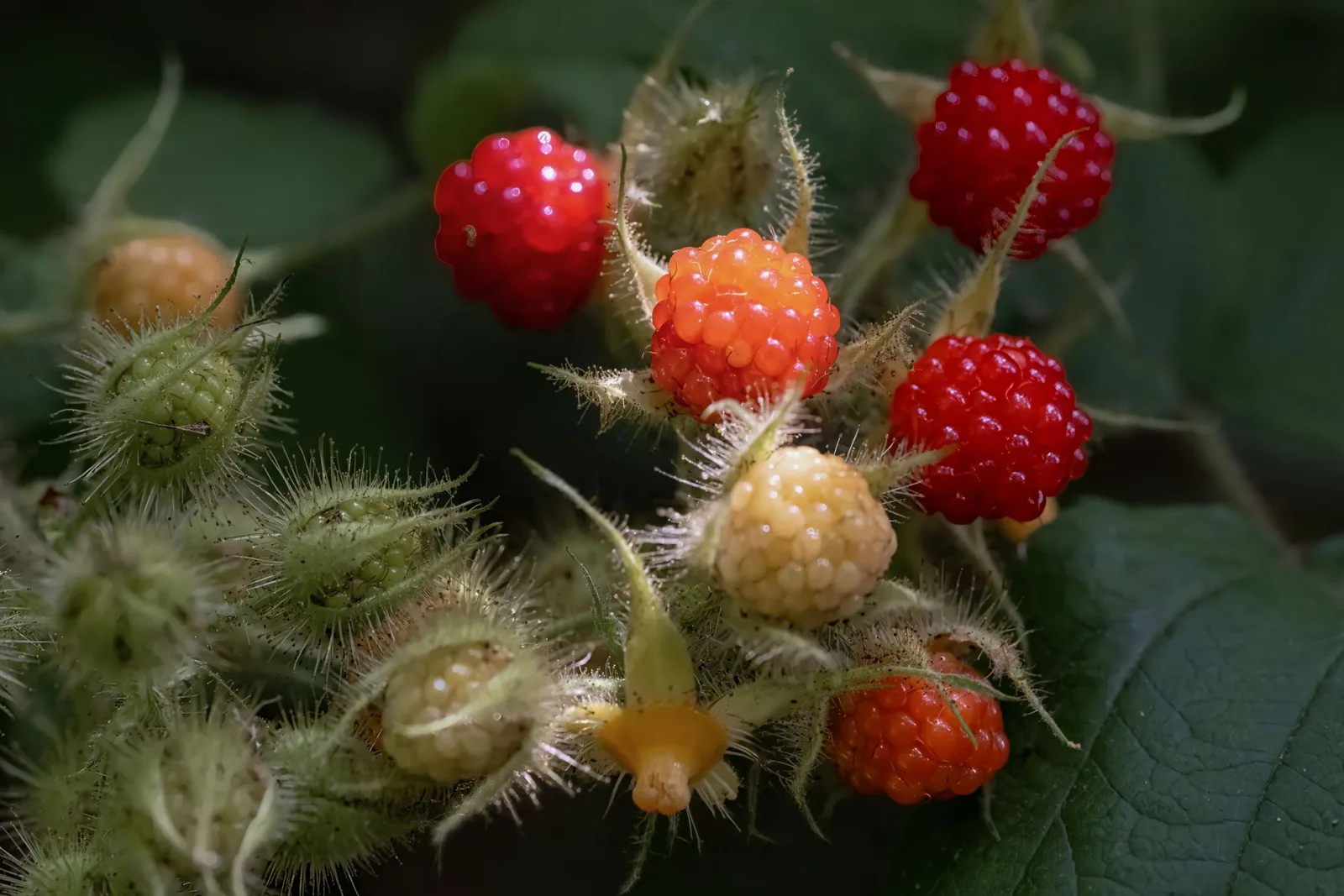
Raspberry is the common thread of this range. It is traditionally linked to female wellbeing, during menstruation as well as at menopause, and the single-ingredient version is taken at 5 to 15 drops a day.
The appeal of gemmotherapy lies in this long-term logic: rather than targeting a single discomfort, the bud is taken over several weeks to follow the rhythm of the cycle. Readers who want to understand this wider mechanism can turn to our guide on female hormonal balance.
What sets the range apart
- No chasteberry. None of the three HerbalGem formulas contains it. That is a real deciding factor for women who prefer to avoid this plant, for instance when taking hormonal medication.
- A choice of format. The capsules contain less than 0.1% alcohol, whereas the drops contain 40% vol. Two ways of taking it for two different profiles.
- A stated course length. The laboratory recommends three months for its capsules, which matches three cycles.
Oligobs, Sérélys, Dietaroma and Best of Natural: four different approaches
The four other brands do not belong to the same product family. Comparing them means placing them one by one.
Oligobs SPM, the mineral option
Laboratoire CCD, known for its Oligobs range, sells a tablet formula combining saffron (102 mg), butcher’s broom (138 mg), magnesium (300 mg, or 80% of the nutrient reference values), zinc (15 mg) and vitamin B6 (1.4 mg). Intake is targeted: three tablets a day over the 10 days before a period. A box of 30 tablets therefore covers one cycle, for 12.83 euros at a French pharmacy retailer.
Sérélys SPM, the pollen route
Sérélys Pharma built its formula on purified cytoplasmic pollen extracts of Swedish origin (320 mg per capsule), supplemented with 50 mg of saffron extract and 10 mg of vitamin E. The brand highlights its non-hormonal nature. The protocol calls for one capsule a day for two cycles, then one week before and one week during the period. The formula comes in a box of 30 capsules.
Dietaroma, six organic plants at a low price
Dietaroma’s organic premenstrual formula brings together yarrow, lemon balm, ginger, lady’s mantle, dandelion and a small share of chasteberry (50 mg dry plant equivalent). The retailer’s advice is one tablet a day, 12 days before a period and 3 days after. The 30-tablet box sells for 14.55 euros.
Best of Natural Harmonie, chasteberry first
Best of Natural’s Harmonie formula carries the highest chasteberry dose in this comparison, with 420 mg of fruit powder per 6 capsules. It adds boswellia, German chamomile, sweet fennel, vitamin E and a generous 6.9 mg of vitamin B6, to be counted in the total daily intake. The 60-capsule bottle costs 29.90 euros, with an intake of up to 6 capsules a day.
Chasteberry, saffron, magnesium: what the actives in this aisle are worth
Choosing a brand almost always raises a second question: which ingredients, and backed by what level of evidence? The table below goes through them one at a time.
| Active | Found in | Reference framework | Point to watch |
|---|---|---|---|
| Chasteberry (Vitex agnus-castus) | Dietaroma, Best of Natural | European monograph, 2018 revision | Not advised during pregnancy and breastfeeding, advice useful with hormonal medication |
| Saffron | Oligobs, Sérélys | Plant claims awaiting European assessment | Doses vary widely between brands (50 to 102 mg) |
| Vitamin B6 | Oligobs, Best of Natural | Authorised claim on hormonal activity | Generous doses, to be counted in the total daily intake |
| Magnesium | Oligobs | Authorised claims on fatigue and psychological function | To be counted in the total daily intake with other supplements |
| Downy birch bud and raspberry young shoots | HerbalGem | Traditional use in gemmotherapy | Oral use only, never on the skin |
What the European Medicines Agency says In its monograph on chasteberry fruit, revised in 2018, the European Medicines Agency (EMA) recognises a “well-established use” for one specific dry extract in premenstrual syndrome, over three months of continuous use. Other chasteberry preparations fall under traditional use.
How much a three-cycle course costs by brand
The price of the box is misleading, because brands do not recommend the same number of intake days. Worked out over three cycles, the duration used by HerbalGem and by the chasteberry monograph, the budget becomes easier to read.
| Brand | Recommended intake | Boxes for 3 cycles | Budget over 3 cycles |
|---|---|---|---|
| Oligobs SPM | 3 tablets over 10 days | 3 | 38.49 € |
| Dietaroma | 1 tablet over 15 days | 2 | 29.10 € |
| HerbalGem capsules | 1 capsule a day, continuously | 3 | 67.50 € |
| Sérélys SPM | 1 capsule a day, then 14 days per cycle, non-hormonal formula | 3 | 102 € |
| Best of Natural | Up to 6 capsules a day, highest chasteberry dose | 60-capsule bottle | 29.90 € per bottle |
HerbalGem sits in the middle of the range for continuous intake, and the drop complex or single raspberry offer a gentler price point.
Choosing a formula to suit your profile
None of these formulas suits every situation. A few pointers help narrow things down, and choosing a female hormonal balance supplement carries on beyond the cycle, into perimenopause.
- Prefer a chasteberry-free formula: HerbalGem, Oligobs or Sérélys. This is the most common case alongside hormonal medication.
- Go for organic: HerbalGem and Dietaroma are the only two certified brands in the panel.
- Limit intake to a few days a month: Oligobs and Dietaroma, designed for the second half of the cycle.
- Avoid alcohol: capsules from HerbalGem, Sérélys and Best of Natural rather than drop formats.
- Give it time: gemmotherapy works gradually, and most protocols in this aisle are assessed after three cycles.
Good to know Discomfort that stops you from working, a very low mood every month or a cycle that changes rhythm are worth discussing with a doctor or a midwife. Reading up on gemmotherapy contraindications is also useful before combining several courses.
Frequently asked questions
Which supplement brand should you choose for PMS and menstrual comfort?
Five brands shape the French market. HerbalGem (organic gemmotherapy) offers three formats dedicated to the cycle, from 18.90 to 22.50 euros, built around raspberry young shoots and free from chasteberry. Oligobs SPM by Laboratoire CCD combines saffron, butcher’s broom, magnesium, zinc and vitamin B6 for 12.83 euros per cycle. Sérélys SPM relies on pollen extracts and saffron, at 34 euros a box. Dietaroma blends six organic plants including chasteberry for 14.55 euros. Best of Natural packs 420 mg of chasteberry and vitamin B6 into its Harmonie formula, at 29.90 euros. The choice mostly comes down to whether you want chasteberry or not, and how much the organic label matters to you.
Which ingredients are found in premenstrual syndrome supplements?
Four families keep coming back: chasteberry (Vitex agnus-castus), saffron, minerals and vitamins (magnesium, vitamin B6, zinc, vitamin E) and plants with a tradition of use for women, such as yarrow, lady’s mantle or raspberry. Chasteberry is the only one covered by a European monograph for premenstrual syndrome, revised in 2018. Vitamin B6 carries an authorised claim on the regulation of hormonal activity.
How long should a menstrual comfort course last?
Brands think in cycles rather than days. Oligobs is taken over the 10 days before a period, Sérélys continuously for two cycles and then two weeks per cycle, and HerbalGem recommends a three-month course for its capsules. The European chasteberry monograph also refers to three months. A fair assessment is therefore rarely possible before the third cycle.
Is gemmotherapy suitable during the menstrual cycle?
Raspberry young shoots are traditionally linked to female wellbeing, during menstruation as well as at menopause. They are taken orally only, at 5 to 15 drops a day diluted in a glass of water. Drop formats contain alcohol, which is why some brands also offer a capsule version. Pregnancy and breastfeeding call for professional advice before any intake.
When should you see a doctor rather than take a supplement?
Discomfort that stops you from working, a mood that drops sharply every month or periods that suddenly change rhythm call for an appointment with a doctor or a midwife. Advice is also useful before combining a chasteberry supplement with hormonal medication, contraception included. A supplement supports a cycle, it does not replace gynaecological follow-up.