
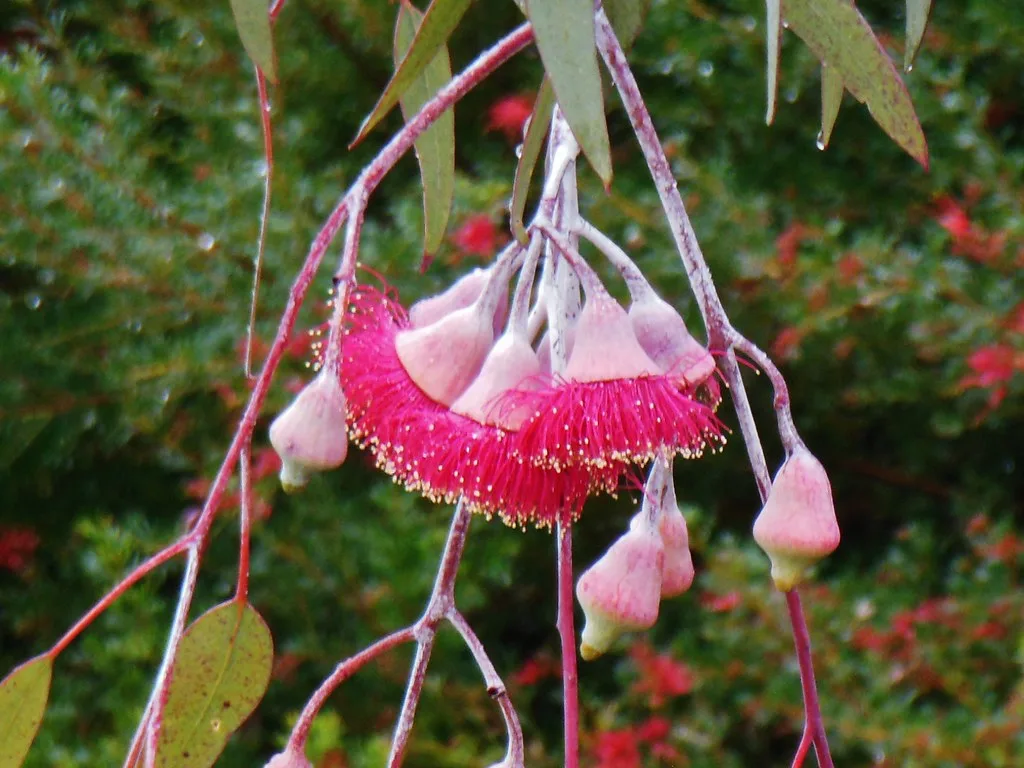
Known for its decongestant action and gentle profile, eucalyptus radiata essential oil is one of the most widely used oils in family aromatherapy during autumn and winter. Still, it helps to know how to dose it correctly, choose the right route of use, and understand its precautions to get all its benefits without risk.
The benefits of eucalyptus radiata essential oil for the respiratory tract
Extracted by distillation from the leaves of eucalyptus radiata, native to Australia, this essential oil stands out for its richness in 1,8-cineole, a compound with well-documented expectorant and mucolytic properties.
- Decongestant action: it thins bronchial and nasal secretions, useful for colds, rhinopharyngitis or sinusitis
- Antiviral and antibacterial effect: it helps limit the spread of germs responsible for winter ENT infections
- Anti-catarrhal action: it soothes mucous membrane inflammation and limits the excess secretion linked to a productive cough
- Mild skin antiseptic: its antibacterial properties also make it a supporting care for certain skin blemishes
This versatility, combined with a favorable tolerance profile, explains why eucalyptus radiata ranks among the organic essential oils most recommended for the winter family kit.
Eucalyptus radiata (Eucalyptus radiata) should not be confused with eucalyptus globulus, a different botanical species that is even richer in 1,8-cineole but also more irritating to mucous membranes and sensitive airways. This distinction explains why eucalyptus radiata is generally preferred for family use, including for children from age 3, whereas eucalyptus globulus remains reserved for adults.
On the label, the mention of the chemotype (chemotyped essential oil, or CT-EO) and the 1,8-cineole percentage help verify the quality of the bottle before purchase. A quality eucalyptus radiata typically shows between 60 and 75% 1,8-cineole, a level that guarantees both decongestant efficacy and better skin tolerance than oils with a higher cineole content, such as globulus.
How to use eucalyptus radiata essential oil on the skin
The skin route remains the simplest method to benefit from eucalyptus radiata’s decongestant action on a daily basis.
Chest massage for a cold or bronchitis
In 9 ml of vegetable oil (sweet almond or apricot kernel), dilute 1 ml of eucalyptus radiata essential oil, for a concentration of about 10%. Massage the upper back, chest and soles of the feet, 2 to 3 times a day, until symptoms improve.
Localized application for adults
For occasional use on healthy skin, 1 drop of pure essential oil can be applied to the wrists or upper chest, then inhaled deeply. This application is limited to adults with no contraindication and should not be repeated more than twice a day.
For children over 3, the dilution should be increased to 50% in a vegetable oil, applied once to the chest, once a day at most.
Application around the nose for sinusitis
To clear the sinuses, a 20% dilution (about 4 drops of essential oil per 1 ml of vegetable oil) can be applied very locally to the sides of the nose and upper cheekbones, carefully avoiding the eye area. This can be repeated 2 to 3 times a day as long as congestion persists, without exceeding one week of continuous use.
Diffusion and inhalation: other ways to use it
Beyond the skin route, eucalyptus radiata essential oil is also effective in atmospheric diffusion and inhalation.
Diffusion to purify the air
In a cold diffuser (nebulizing or ultrasonic), a few drops of eucalyptus radiata essential oil are enough to purify the air in a room. As a guide, 3 to 5 drops suit a 20 m² (around 215 sq ft) room, adjusted to the device’s power. Diffuse in 10 to 15 minute sessions, repeated 2 to 3 times a day, airing out the room between sessions. To adjust the essential oil diffuser dosage according to room size and diffuser model, it’s best to follow the guidelines specific to each device. Around infants, pregnant women or people with a fragile constitution, dilute eucalyptus radiata to 30% at most in a blend with other essential oils before diffusing.
Steam inhalation for a blocked nose
For sinusitis or a blocked nose, pour 3 to 4 drops of eucalyptus radiata essential oil into a bowl of hot (not boiling) water. Lean over it, head covered with a towel, eyes closed, and breathe deeply for 5 to 10 minutes. This method works well alongside solutions for an essential oil to unblock the nose, and can also be combined with oils suited to a runny nose during a cold.
Supervised oral use
Eucalyptus radiata can also be taken orally for a cold, bronchitis or flu: 2 drops diluted in a teaspoon of honey or on a neutral tablet, up to 3 times a day, for a maximum of 5 consecutive days. This route should not be continued beyond that without a healthcare professional’s advice.
What dosage and dilution to use
The table below summarizes the usual guidelines by audience and route, as a general reference.
| Audience | Route | Recommended dilution |
|---|---|---|
| Adult | Skin application (back, chest) | 10%, i.e. 1 ml per 9 ml of vegetable oil |
| Adult | Localized application (wrists) | Pure, 1 drop, occasional use |
| Child +3 years | Skin application | 50% in a vegetable oil, once a day |
| Adult | Atmospheric diffusion | A few drops, 10-15 minute sessions |
| Adult | Oral route | 2 drops in honey, up to 3 times/day, 5 days maximum |
These guidelines remain general: for an underlying condition, pregnancy, or use with a child, a pharmacist’s or aromatherapist’s advice remains the best safety guarantee.
Precautions and contraindications of eucalyptus radiata essential oil
Generally well tolerated, eucalyptus radiata essential oil still requires several precautions.
- Pregnancy and breastfeeding: not recommended during the first 3 months of pregnancy; a midwife’s or doctor’s advice is recommended beyond that
- Infants: to be avoided before 3 months; between 3 months and 3 years, reserve its use to pediatric advice
- Epilepsy: eucalyptus radiata is not recommended for people with epilepsy due to a seizure risk at high doses
- Asthma: its use via the respiratory route (diffusion, inhalation) should be avoided for people with asthma, as the vapor may trigger breathing discomfort
- Sensitive or allergy-prone skin: a skin test on the inside of the elbow, 48 hours before first use, helps detect a possible reaction
These precautions do not undermine the generally favorable tolerance profile of eucalyptus radiata, but are a reminder that an essential oil remains a concentrated active ingredient, to be used with judgment even for the gentlest oil in the family kit.
Synergies with other essential oils
Eucalyptus radiata becomes more effective when combined with other complementary essential oils, particularly for winter ailments.
- Ravintsara: strengthens the antiviral and immune-supporting action, in synergy against ENT infections
- Tea tree: adds a useful antibacterial action in case of respiratory tract superinfection
- Peppermint: brings a complementary refreshing and decongestant effect for a blocked nose
- Niaouli: shares a similar biochemical profile and can be substituted if unavailable, with a comparable tolerance
Choosing a reliable essential oil brand, with the chemotype and batch number stated on the label, determines the quality and safety of eucalyptus radiata, as with any essential oil.
Frequently Asked Questions
Can eucalyptus radiata essential oil be used on children?
From age 3, eucalyptus radiata essential oil can be applied diluted at 50% in a vegetable oil, in a small amount on the chest or upper back. Below age 3, its use is not recommended without a pediatrician’s advice, even though it is considered one of the best-tolerated essential oils.
What precautions should be taken before using eucalyptus radiata essential oil?
It is not recommended for pregnant women in the first 3 months, for infants under 3 months, or for people with epilepsy or asthma, particularly via the respiratory route. A skin test on the inside of the elbow is recommended before first use, especially for sensitive or allergy-prone skin.
How do you diffuse eucalyptus radiata essential oil at home?
A few drops are enough in a cold diffuser, for a 10 to 15 minute session repeated two to three times a day. For use around children, pregnant women or people with a fragile constitution, dilute it to about 30% in a blend with other essential oils before diffusing.
Can eucalyptus radiata essential oil be taken orally?
Yes, but only occasionally and under supervision: 2 drops in honey or on a neutral tablet, up to 3 times a day for a maximum of 5 days. Beyond that, or in case of doubt about an underlying condition, a pharmacist’s or doctor’s advice is essential.