
Faced with a device fresh out of its box, knowing how to use an essential oil diffuser is not always obvious: the instructions vary depending on the technology chosen, and poor handling can both reduce the diffusion’s effectiveness and needlessly expose the room’s occupants. This guide details the different types of diffusers, the steps specific to each one, the dosage to respect, and the precautions to know before the first use.
Why use an essential oil diffuser
Diffusion disperses aromatic molecules into the ambient air, without going through the skin or the digestive tract. It is the simplest method to enjoy an essential oil’s benefits throughout an entire room, whether to purify the air, promote relaxation, or support falling asleep.
Unlike skin application or targeted inhalation, diffusion affects a whole room over an extended period, which calls for specific dosage and duration rules. It suits an occasional daily use well, in a living room, bedroom or office, but remains less suited than a dry inhalation for fast, localized relief.
A well-used diffuser does more than scent a room: the chosen blend and the time of day directly influence the result felt. A morning diffusion of citrus oils tends to boost alertness, while an evening diffusion based on lavender or petitgrain bigarade favors relaxation before bedtime. This flexibility, specific to diffusion, explains its popularity compared with other essential oil administration routes, and it is also why diffusion is so often recommended alongside an essential oil for stress and anxiety blend.
What are the different types of essential oil diffusers
Each diffuser technology works differently, with its own filling and maintenance constraints.
| Diffuser type | How it works | Water needed |
|---|---|---|
| Nebulizing | Projects pure essential oil as micro-particles, without heat | No |
| Ultrasonic (mister) | Vaporizes a mix of water and essential oil through micro-vibrations | Yes |
| Gentle heat | Lightly heats pure essential oil to volatilize it | No |
| Capillary (wood, ceramic) | Passively absorbs and releases pure essential oil | No |
The nebulizing diffuser is the most powerful: it does not heat the essential oil, which preserves all of its properties, but it uses more product and suits larger rooms best. The ultrasonic diffuser, the most common in homes, also slightly humidifies the air in addition to diffusing essential oils, an advantage in winter when heating dries out the atmosphere.
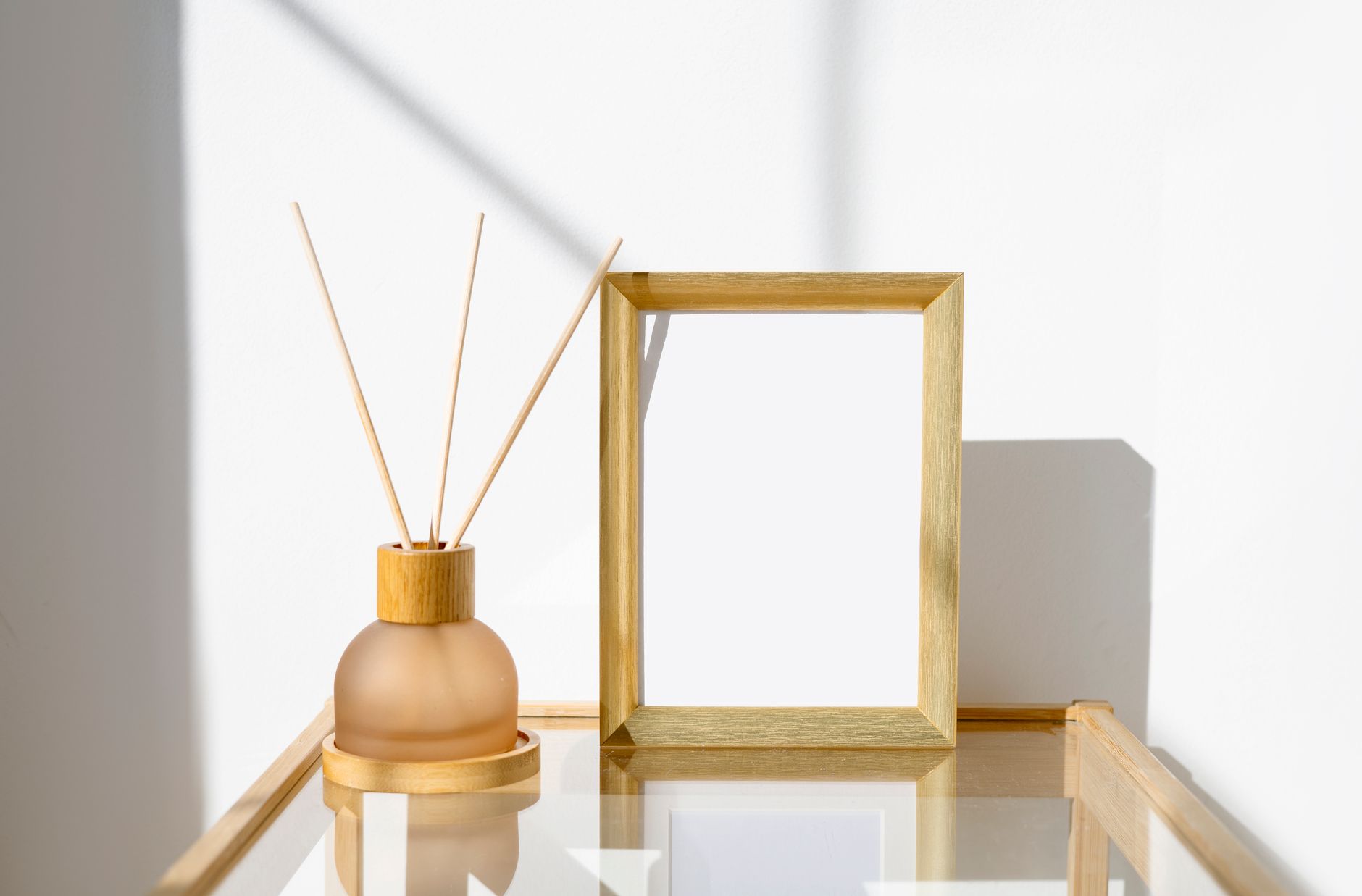
Gentle-heat diffusers and capillary models (rattan reeds, ceramic stones, wood) diffuse more discreetly and for longer, without electricity for the latter. They suit a nightstand, a desk or a small room well, but their intensity stays lower than that of a nebulizer or an ultrasonic model.
How to use an essential oil diffuser step by step
Getting started varies depending on whether the device runs on water or on pure essential oil.
Does the diffuser need water
Only ultrasonic diffusers and misters need water: fill the tank up to the marked level, preferably with low-mineral water to limit scale buildup, then add the essential oil drops on top. Nebulizing, gentle-heat or capillary diffusers are filled with pure essential oil only, without any water, directly into the bottle or tank provided for that purpose.
How many drops of essential oil to use
The number of drops depends on both the device type and the tank’s volume. For an ultrasonic diffuser, count generally 3 to 5 drops per 100 ml of water, and up to 10 to 15 drops for a 400 ml tank. A nebulizing diffuser is dosed differently, in pure essential oil, with 5 to 10 drops depending on the removable bottle’s size. The full detail for each technology and room size is covered in the guide on essential oil diffuser dosage.
Once the tank is filled, simply turn on the device, often with a single button or a built-in timer, and let it run for the recommended duration before switching it off or letting it stop automatically.
What precautions should be taken to diffuse safely
A few rules limit the risks linked to diffusing essential oils, whatever technology is chosen.
- Diffusion duration: do not exceed 15 to 20 minutes per hour, to let the room’s air renew between two sessions.
- Children and babies: diffusion is not recommended in an infant’s room, and is reserved for gentle oils, in short sessions, for children over age 3.
- Pregnant or breastfeeding women: many essential oils are contraindicated for diffusion during pregnancy, especially in the first trimester.
- Pets: cats poorly metabolize certain aromatic molecules, particularly in oils rich in phenols or monoterpenes; the diffused room should remain freely accessible for the animal to leave.
- People with asthma or epilepsy: certain essential oils, especially those rich in 1,8-cineole, can trigger respiratory discomfort or may not be suitable.
Not every essential oil is safe to diffuse either: some are reserved for diluted skin application and become irritating to mucous membranes when diffused for long periods. Reading each oil’s label before adding it to a blend remains the simplest reflex to avoid an unpleasant surprise.
How to choose and maintain an essential oil diffuser
Choosing a diffuser mainly depends on the room’s size and the intended use: an ultrasonic or nebulizing model for a living room, a capillary or gentle-heat diffuser for a nightstand or a desk. A built-in timer makes it easier to respect recommended durations without having to watch the device.
The tank’s capacity should be weighed against the actual area to be scented rather than the maximum volume advertised by the manufacturer: a small 100 ml tank is plenty for a bedroom or an office, while an open living room connected to a kitchen calls for a device with a larger tank or a nebulizing diffuser, which is more powerful. Noise level, often overlooked at purchase, also matters for nighttime use: some ultrasonic models stay silent, others produce a faint hum that can disturb falling asleep.
How to clean a clogged or dirty diffuser
Essential oil residue gradually builds up in the tank and on the diffusion membrane, which eventually reduces the mist’s intensity or clogs the device entirely. Rinsing with lukewarm water after each use limits this buildup. For an already dirty diffuser, a more thorough cleaning with white vinegar diluted in water, left to sit for a few minutes before rinsing, is usually enough to restore normal operation. This routine is best repeated once a week with daily use.
Which essential oils to choose depending on the desired effect
The choice of essential oil depends on the effect sought in the diffused room: relaxation, air purification or support for sleep.
Lavender essential oil, particularly true lavender, remains the most versatile choice for evening diffusion, thanks to its well-documented calming effect and good general tolerance. For a winter-focused use aimed at air purification, oils such as ravintsara or radiata eucalyptus are more sought after, though they require extra caution around children or people with asthma.
Not all essential oils are equal in quality: a poorly identified chemotype or an oil from an uncontrolled crop reduces the expected effectiveness and increases the risk of an adverse reaction. The comparison of the most reliable essential oil brand details the criteria to check before buying, particularly the chemotype mention and the precise botanical origin.
Frequently asked questions
Do all essential oil diffusers need water?
No, only ultrasonic diffusers and misters work with a mix of water and essential oil. Nebulizing diffusers and capillary or gentle-heat models are filled with pure essential oil only, without a single drop of water.
How many drops of essential oil should go in a diffuser?
The number of drops depends on the tank size and the device type: count 3 to 5 drops per 100 ml of water in an ultrasonic diffuser, and 5 to 10 pure drops in a nebulizing diffuser. The precise dosage for each technology and room size is detailed in the guide on essential oil diffuser dosage.
How long can an essential oil diffuser run?
The most common rule limits diffusion to 15 or 20 minutes per hour, whatever device is used. This break lets the room's air renew and avoids prolonged exposure for the occupants, especially children and pets.
Can essential oils be diffused in any room?
No, diffusion is not recommended in a baby's or young child's room, nor in a closed room occupied by someone with asthma or epilepsy. A well-ventilated living room, with a door pets can freely pass through, remains the safest setting.
How do you clean an essential oil diffuser that diffuses poorly?
Essential oil residue gradually builds up in the tank and eventually reduces diffusion. Rinsing with lukewarm water after each session, combined with a weekly cleaning using diluted white vinegar, is usually enough to restore normal operation.