

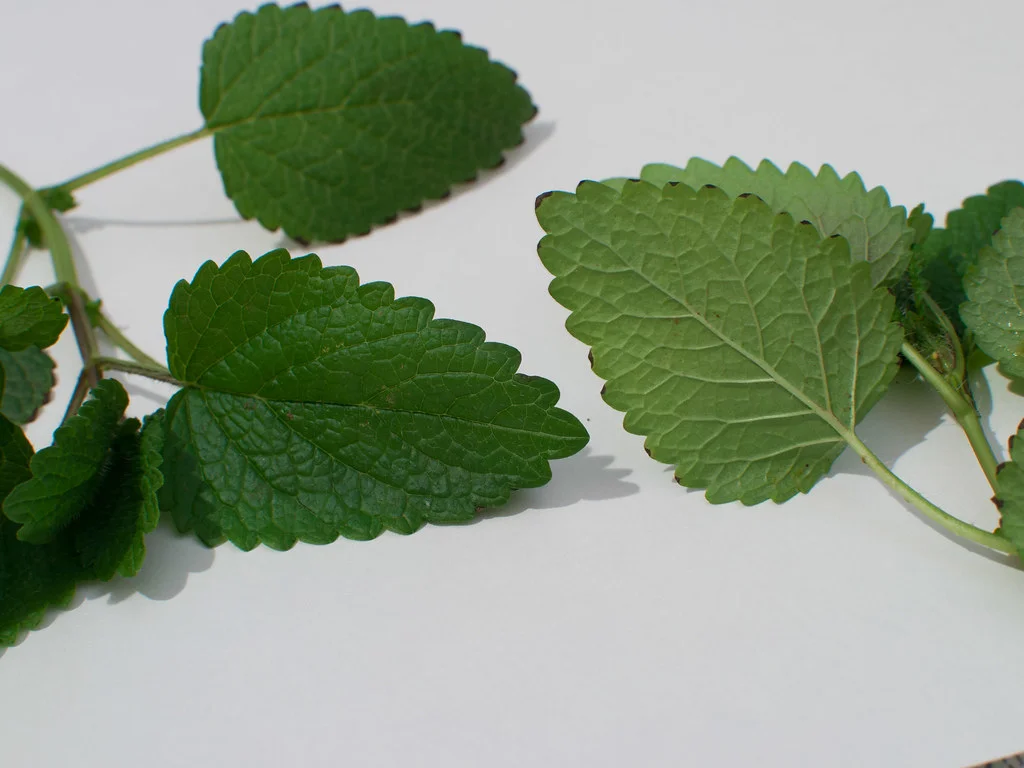
The common cold and nasal congestion average two to four episodes per adult each winter. Before turning to vasoconstrictor sprays with rebound effects, essential oil to unblock the nose offers a natural and fast solution. The key is choosing the right oil and the right route: inhalation for immediate effect, skin application for sustained action.
How essential oils unblock the nose
Nasal congestion is caused by mucosal vessel dilation, which swells and obstructs airflow. Decongestant essential oils work through three complementary mechanisms.
- Oxide molecules (1,8-cineole from radiata eucalyptus) are mucolytic: they thin thick secretions
- Monoterpenes (alpha-pinene from Scots pine, alpha-terpineol from ravintsara) act as local vasoconstrictors
- Menthol from peppermint activates TRPM8 cold receptors, creating a fresh-air sensation that opens nasal passages within seconds
The effect is measurable from the first inhalation: a 2014 study (Pulmonary Pharmacology and Therapeutics) shows improved perceived nasal flow after a single menthol inhalation, without actual airway diameter change. The perceived effect is enough to relieve discomfort.
Top 5 essential oils to unblock the nose
| Essential oil | Main action | User | Preferred route |
|---|---|---|---|
| Peppermint | Immediate cooling effect, decongestant | Adult, teen +12 | Direct olfaction, tissue |
| Eucalyptus radiata | Mucolytic, antiviral | Child +3, adult | Inhalation, diluted application |
| Ravintsara | Broad-spectrum antiviral | Child +3, adult | Inhalation, application |
| Tea tree | Antibacterial, antifungal | Adult | Wet inhalation in synergy |
| Scots pine | Respiratory tonic | Adult | Inhalation, chest rub |
Peppermint, the immediate cooling effect
Peppermint essential oil (Mentha piperita) is the fastest to unblock the nose. A single drop on a tissue, followed by 3 deep breaths, clears the nasal passages in less than 30 seconds.
For adults and teens over 12 only. Contraindicated for pregnant or breastfeeding women, children, epileptics, hypertensive people, and cardiac patients.
Radiata eucalyptus, the gentle mucolytic
Gentler than peppermint, radiata eucalyptus essential oil (Eucalyptus radiata) suits children over 3 in diluted skin application. Rich in 1,8-cineole (60 to 70 %), it thins secretions and aids their evacuation.
A go-to oil for inhalations in case of cold, mild sinusitis, or winter bronchitis.
Ravintsara, the antiviral
Ravintsara (Cinnamomum camphora ct cineole) is a well-studied antiviral oil. It pairs perfectly with radiata eucalyptus in synergy for viral colds. Well tolerated from age 3 in diluted skin application.
Tea tree, the versatile
Tea tree essential oil (Melaleuca alternifolia) adds antibacterial and antifungal action, useful for superinfections. Mainly used in wet inhalation synergy, rarely alone for blocked nose.
Scots pine, the respiratory tonic
Less common in self-medication, Scots pine (Pinus sylvestris) is appreciated for its woody scent and tonic action on the airways. Best in evening chest-rub blends.
3 effective methods of use
Dry inhalation: the flash effect
Dry inhalation is the simplest and fastest method. On a tissue, an inhaler stick, or directly from the open bottle:
- 1 drop of peppermint (adult) OR
- 1 drop of radiata eucalyptus + 1 drop of ravintsara (child +6, adult)
Take 3 to 5 slow, deep breaths per nostril. Repeat 4 to 6 times a day for a maximum of 5 days.
Wet inhalation: in-depth effect
More powerful but with more contraindications:
- Heat 1 litre of water to 70 °C (not boiling: too-hot vapour destroys actives)
- Pour into a wide bowl
- Add 2 drops of radiata eucalyptus + 2 drops of ravintsara + 1 drop of tea tree
- Position head above bowl, covered with a towel
- Breathe deeply for 10 minutes, eyes closed
- Twice a day, max 5 days
Contraindicated for children under 6, pregnant women, asthmatics. Avoid in dry rhinitis (too irritating).
Skin application: the sustained effect
For prolonged decongestant action, complementing inhalations:
In 5 ml of vegetable oil (sweet almond, apricot kernel):
- 5 drops of radiata eucalyptus
- 5 drops of ravintsara
- 3 drops of Scots pine (adult only)
Apply gently to the chest, upper back, and base of the neck, twice a day.
For children aged 3 to 6, divide doses by 4 and skip Scots pine. To complement the aromatherapy approach, the complete aromatherapy guide details the basics of use and safety.
3 anti-cold synergies
Express blocked-nose roll-on (adult)
In a 10 ml roll-on:
- 5 ml of vegetable oil
- 30 drops of peppermint
- 20 drops of radiata eucalyptus
Apply on nostrils, sternum, and wrists, up to 6 times a day.
Children +6 inhalation
In an inhaler stick:
- 5 drops of radiata eucalyptus
- 5 drops of ravintsara
- 2 drops of tea tree
3 to 5 breaths per nostril, 4 times a day.
Evening chest massage (adult)
In 30 ml of vegetable oil:
- 30 drops of ravintsara
- 30 drops of radiata eucalyptus
- 20 drops of Scots pine
- 15 drops of tea tree
Massage chest and back before bed.
Precautions and contraindications
Four imperative rules.
- Pregnant or breastfeeding women: avoid almost all decongestant essential oils in the first trimester. After medical advice, radiata eucalyptus is tolerated from the 2nd trimester, in diluted application only.
- Children under 3: no essential oil without medical prescription. Prefer room humidification and saline solution.
- Asthmatics, epileptics: avoid peppermint, globulus eucalyptus, cineole rosemary. Radiata eucalyptus is better tolerated.
- Wet inhalation: always eyes closed. No more than 10 minutes. Do not lie down immediately after (risk of blood pressure drop).
Air humidification (radiator humidifier, saline rinses 4 to 6 times a day) reinforces essential oil effectiveness. During the day, a natural nasal spray for a blocked nose made with hypertonic seawater takes over between two inhalations. For bud extracts that regulate the airways (blackcurrant, hornbeam), gemmotherapy offers a useful long-term complement.
When to see a doctor
Three signals should prompt medical advice:
- Nose remains blocked for more than 10 days despite essential oils
- Onset of facial pain with fever above 38.5 °C: suspect bacterial sinusitis
- Persistent greenish nasal discharge, lasting loss of smell, associated dental pain
A chronic blocked nose, outside infectious episodes, may signal nasal polyposis, severe allergic rhinitis, or septum deviation requiring ENT care.
Frequently asked questions
Which essential oil unblocks the nose quickly?
Peppermint is the fastest thanks to its menthol, which instantly opens the nasal passages with a cooling effect. A single drop on a tissue, followed by 3 breaths, unblocks the nose in under 30 seconds. Reserved for adults and adolescents, never before age 6.
Which essential oil to unblock a child's nose?
For children over 3, eucalyptus radiata is a go-to oil. Dilute to 5 % in a vegetable oil, then 2 to 3 drops applied to the chest and upper back, twice a day. Under 3 years old, avoid any essential oil without medical advice.
How do you do an inhalation to unblock the nose?
Pour 1 litre of water at 70 °C into a bowl, add 2 to 4 drops of essential oil (radiata eucalyptus + ravintsara), place your head above with a towel, and breathe deeply for 10 minutes. Twice a day, eyes closed during inhalation.
Is an essential oil to unblock the nose compatible with pregnancy?
Most decongestant essential oils are contraindicated during pregnancy, especially in the first trimester: peppermint, eucalyptus, ravintsara, niaouli. A hypertonic seawater spray remains the safest alternative. Ask your midwife or doctor.
How long should you use an essential oil for a blocked nose?
In acute cold cases, limit essential oil use to 5 consecutive days. Beyond that, consult a doctor: a persistent blocked nose may signal sinusitis, chronic rhinitis, or nasal polyposis requiring medical care.