

In short:
- Ingested collagen holds no authorised health claim. In the annex to Regulation (EU) No 432/2012, the word collagen appears only within six claims belonging to vitamin C.
- Four brands shape the French marine collagen offering in 2026: Biocyte, Nutripure, Nutri&Co and Novoma, on radically different formulation choices.
- Biocyte delivers 10 g of collagen per day, the highest dose in the comparison, and above all the dose used in the trial on 33 patients the brand cites in support of its results.
- The gap between the extremes is tenfold, from 1 g at Novoma to 10 g at Biocyte, and monthly prices vary depending on the format, the dose and the additional ingredients of each product.
| Criterion | Biocyte | Nutripure | Nutri&Co | Novoma |
|---|---|---|---|---|
| Product | Collagen Express Marin 10 g | Collagène Marin Sauvage | Collagène Marin | Collagène Marin with hyaluronic acid |
| Form | Sticks to dissolve | Powder in a pouch | Powder with a scoop | Capsules |
| Collagen per day | 10 g across 2 sticks | 310 g pouch for 1 month, roughly 10 g | 5.5 g | 1 g across 3 capsules |
| Label and type | PEPTAN, type I | Naticol, types I and III | Naticol types I and III, Cartidyss type II | Naticol, types I and III |
| Molecular weight | 5000 Daltons | 2000 Daltons | 2000 Daltons | Not stated on the product page |
| Vitamin C | Absent | Absent, single-ingredient range | 24 mg, or 30 % of reference intakes | 80 mg |
| Other actives | None | None | None | Hyaluronic acid 100 mg, zinc 10 mg, vitamin E 12 mg, vitamin B6 1.4 mg, biotin 450 µg |
| Additives | Fructose, flavourings, acesulfame K, sucralose, beta-carotene | None, 100 % pure and neutral | Acacia gum, natural flavourings, citric acid | Plant-based capsule |
| Flavour | Peach | Neutral, or chocolate, lemon, raspberry, exotic | Peach, chocolate, lemon, red berries, vanilla, matcha, neutral | Not applicable |
| Price | 26.00 euros for 10 days, 62.40 euros for the month down from 75.00 euros | 89.90 euros for the 310 g month, also a 150 g format | 30.90 euros for 180 g, 30 servings | 22.90 euros, or 0.72 euro per day |
| Verdict | The highest dose, aligned with the clinical trial cited | The simplest formula, a single ingredient with no additives | The best balance of dose, collagen types and vitamin C | The most complete micronutrient matrix |
How to compare a marine collagen without getting it wrong
The collagen category has thickened around a shared promise, skin firmness and appearance, carried by formulations that have almost nothing in common. Between a single-ingredient powder and a capsule enriched with micronutrients, the amount of collagen ingested varies by a factor of ten.
Four criteria allow a comparison of the best marine collagens: the real collagen dose per daily serving, the presence of a nutrient carrying an authorised claim, the nature of the additives, and the price expressed across the course.
Daily dose is the criterion that distorts comparisons most. A capsule product typically provides around one gram, where a powder reaches 10 g. Comparing a box price without looking at that quantity leads to inverted conclusions.
Molecular weight is a second element. Several brands publish the figure, hydrolysis being promoted as a sign of absorption, even though no claim attaches to that criterion.
What a collagen supplement is legally allowed to promise
European regulation strictly frames the effects that may be claimed, and that framework holds a surprise in this particular category.
The annex to Regulation (EU) No 432/2012 contains no claim attributed to collagen. The word appears only within six claims that all belong to vitamin C, covering normal collagen formation for skin, bones, cartilage, gums, teeth and blood vessels.
“Vitamin C contributes to normal collagen formation for the normal function of skin” Regulation (EU) No 432/2012, annex of authorised health claims
The consequence is direct for a buyer. A supplement made solely of collagen peptides, whatever its dose, does not benefit from an authorised health claim. A supplement that adds vitamin C may, on account of that vitamin and not of the collagen.
Hyaluronic acid holds no authorised claim either. The maintenance of normal skin, by contrast, is covered by several nutrients found in some formulas, including zinc, biotin, niacin, riboflavin and vitamin A.
This grid offers another reading of the four products. Novoma, with 80 mg of vitamin C, 10 mg of zinc and 450 µg of biotin, is the one whose label can carry the most claims.
Biocyte, the dose aligned with the trial it cites
Collagen Express Marin 10 g from the Nice-based brand comes as sticks to dissolve in a large glass of water, at one to two sticks a day, for an intake of 10 g of PEPTAN marine collagen hydrolysate across two sticks.
It is the highest dose in the comparison, and its main interest lies in a notable consistency: it matches exactly the dose used in the clinical trial the brand promotes, run on 33 patients over 8 weeks against placebo, with a stated result of 28 % additional hydration.
The brand also cites a usage test on 21 people over 2 weeks, in which 90 % of users reported plumper skin.
The product is sold as a 10-day programme at 26.00 euros and a one-month programme at 62.40 euros, down from 75.00 euros. The flavour is peach, achieved with fructose, natural flavourings and two sweeteners, acesulfame potassium and sucralose.
Two features are worth noting. The stated molecular weight is 5000 Daltons. And the formula concentrates on PEPTAN marine collagen, dosed at 10 g per day as in the clinical trial cited by the brand.
Nutripure, a single-ingredient formula with no additives
Nutripure’s Collagène Marin Sauvage belongs to a range presented as single-ingredient. The product rests on Naticol peptides of types I and III, from wild fish caught in Europe, hydrolysed to 2000 Daltons and presented as 100 % pure.
The stance is the complete absence of additives. The neutral format contains no flavouring, no sweetener and no colouring. Flavoured versions do exist alongside it, in chocolate, lemon, raspberry and exotic.
Two formats are offered, a 150 g pouch covering 15 to 30 days and a 310 g pouch covering one month, the latter therefore corresponding to around 10 g per day, on a par with Biocyte. Nutripure offers two formats, a 150 g pouch and a 310 g pouch, the second covering one month of a course.
Like Biocyte, Nutripure contains no vitamin C, which follows logically from the single-ingredient positioning. The brand addresses the question in its own FAQ, discussing the pairing of collagen with vitamin C rather than building it into the formula.
Nutri&Co, the best balance of dose and nutrients
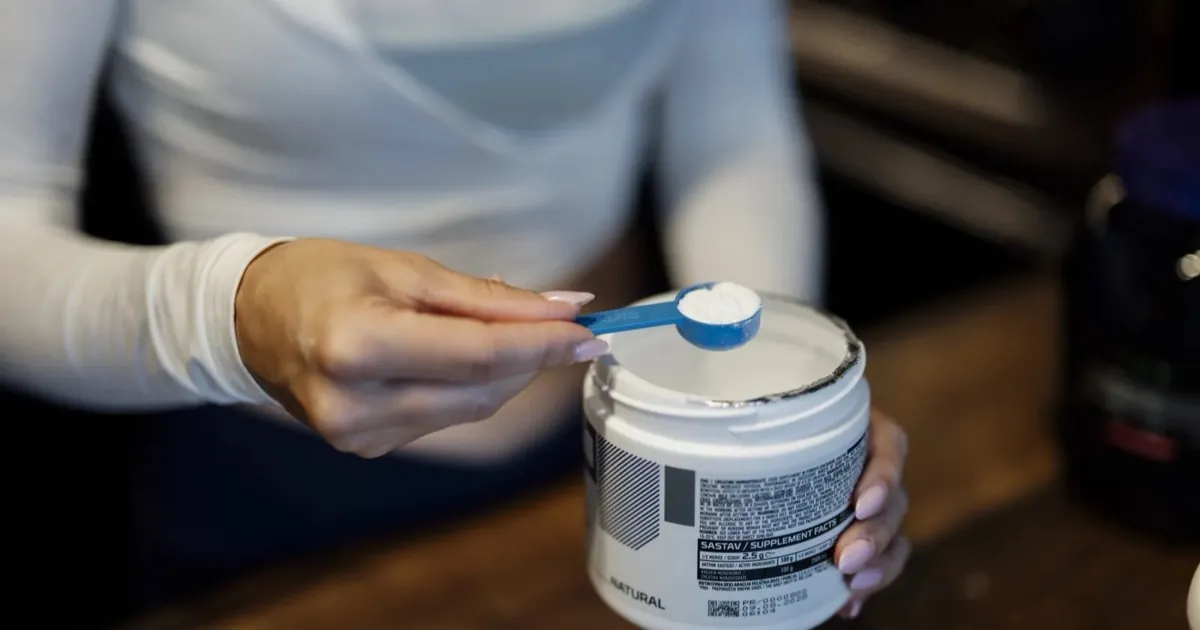
Nutri&Co’s Collagène Marin is offered at 30.90 euros for 180 g, or 30 servings covering one month, with a daily dose of 6 g of powder.
The composition is the most diversified of the three powders compared. It combines 5 g of Naticol collagen of types I and III, 500 mg of Cartidyss type II collagen, and 24 mg of vitamin C, or 30 % of reference intakes. The stated molecular weight is 2000 Daltons.
Adding type II is a distinctive feature. Types I and III mainly concern skin and supporting tissue, while type II is associated with cartilage, which widens the product’s scope beyond the skin alone.
The presence of vitamin C allows the brand to rely on an authorised claim. Nutri&Co associates marine collagen of types I, II and III with vitamin C.
The brand cites four clinical studies on skin and two on joints, with stated results of 22 % additional firmness at 8 weeks and 16.5 % fewer wrinkles around the eye at 12 weeks. Seven flavours are available, including a neutral version.
Novoma, the most complete micronutrient matrix
Novoma’s Collagène Marin stands out through its format, capsules rather than powder, at three capsules a day for 22.90 euros, or 0.72 euro per day.
Novoma offers a practical capsule format, which combines a collagen intake of 1 g per day with a matrix rich in micronutrients.
In return, the formula is the richest in nutrients carrying claims. It provides 100 mg of hyaluronic acid, 80 mg of vitamin C in Quali-C form, 12 mg of vitamin E, 10 mg of zinc, 1.4 mg of vitamin B6 and 450 µg of biotin.
Three of those nutrients hold authorised claims that are useful here: vitamin C for normal collagen formation, zinc and biotin for the maintenance of normal skin. It is the product whose label can claim the most.
The choice therefore depends on what is sought. For a micronutrient supplement aimed at skin, with a collagen top-up, the formula is coherent and its daily cost stays contained. The brand also claims distribution across more than 1300 partner pharmacies.
Dose, purity or nutrients: three distinct logics
The comparison reveals three formulation strategies that do not rank against one another but answer different objectives.
The dose logic belongs to Biocyte and Nutripure, around 10 g per day, at the level of the doses used in published clinical trials on collagen peptides. It is the route for anyone seeking an intake close to study protocols.
The purity logic is carried by Nutripure, with a single ingredient free of flavourings and sweeteners. It suits anyone wanting full control over what they ingest.
The matrix logic is Novoma’s, and to a lesser extent Nutri&Co’s, where collagen becomes one ingredient among others within a skin formula. It is the approach that allows the most authorised claims on the label.
This reading by formulation logic applies beyond collagen. It recurs in the choice of an external treatment, where the best organic vegetable oil brands set out equally contrasting approaches.
The real cost of a one-month course
Collagen courses are designed over two to three months, since the trials cited run for 8 to 12 weeks. The table below restates each offer on a 30-day basis.
| Product | Packaging | Collagen per day | Monthly cost | Cost per day |
|---|---|---|---|---|
| Novoma Collagène Marin | 3 capsules per day | 1 g | 22.90 euros | 0.72 euro |
| Nutri&Co Collagène Marin | 180 g, 30 servings | 5.5 g | 30.90 euros | 1.03 euro |
| Biocyte Collagen Express Marin | One-month programme | 10 g | 62.40 euros down from 75.00 euros | 2.08 euros |
| Nutripure Collagène Marin Sauvage | 310 g pouch | around 10 g | 89.90 euros | around 3.00 euros |
The cost ranking logically follows the dose ranking. Expressed per gram of daily collagen, the gap narrows sharply: Biocyte comes to around 0.21 euro per daily gram, Nutri&Co to 0.19 euro, Novoma to 0.72 euro. Novoma offers a contained daily cost of 0.72 euro for a formula enriched with micronutrients.
Mistakes to avoid before buying a marine collagen
- Confusing the presence of an ingredient with an authorised effect. Collagen and hyaluronic acid hold no authorised claim, whatever quantity appears on the label.
- Comparing box prices without checking the dose. The range runs from 1 g to 10 g of collagen per day across the four products, a tenfold gap.
- Choosing the format that fits your use. The capsule format is practical and suits those who prefer a lower collagen dose combined with micronutrients, as Novoma offers.
- Reading the composition across a long course. Additives, flavourings and sweeteners differ from one product to another, which matters over several weeks.
- Checking the type of study behind each result. Biocyte cites both a placebo-controlled trial over 8 weeks and a usage test over 2 weeks.
- Looking at vitamin C. Vitamin C is the only nutrient linked to an authorised claim on collagen formation. Novoma and Nutri&Co include it, while Biocyte and Nutripure favour a collagen-only formula.
- Expecting a supplement to replace diet and sun protection. External care keeps its role, as set out in the article on essential oil for deep wrinkles, and the use of actives on skin is reviewed in the guide to essential oils on skin. Hair needs have their own comparison, the best food supplement for hair loss, which details keratin-based formulas.
Frequently asked questions
What is the best marine collagen?
The ranking depends on the criterion. Biocyte Collagen Express Marin delivers 10 g of collagen per day, the highest dose in the comparison and the one used in the clinical trial the brand cites. Nutripure offers the simplest formula, a single-ingredient Naticol hydrolysed to 2000 Daltons, with no flavouring or sweetener. Nutri&Co combines 5.5 g of collagen, three collagen types and 24 mg of vitamin C. Novoma offers the most complete micronutrient matrix, with 80 mg of vitamin C, hyaluronic acid, zinc and biotin, in a capsule format.
Does ingested collagen hold an authorised health claim?
No, none at all. Collagen appears in the annex to Regulation (EU) No 432/2012 only within six claims that belong to vitamin C, including the one stating that vitamin C contributes to normal collagen formation for the normal function of skin. Hyaluronic acid holds no authorised claim either. No health claim is authorised to date for collagen alone; only vitamin C holds claims connected to collagen formation.
How much marine collagen per day?
The gaps between the four products compared are considerable. Biocyte provides 10 g per day across two sticks, Nutripure covers one month with a 310 g pouch which corresponds to roughly 10 g per day, Nutri&Co 5.5 g and Novoma 1 g across three capsules. The 10 g dose matches the one used in the trial on 33 patients cited by Biocyte.
Does the molecular weight of collagen matter?
It is a formulation criterion promoted by brands, with no associated claim. Nutripure and Nutri&Co state hydrolysis to 2000 Daltons, Biocyte to 5000 Daltons. A lower molecular weight corresponds to shorter peptides. The molecular weight of Novoma’s collagen is not stated on its product page, where the brand highlights its micronutrient matrix.
Should vitamin C be combined with collagen?
It is the only way for a product to carry an authorised claim connected to collagen. Two of the four products compared contain it: Novoma with 80 mg and Nutri&Co with 24 mg, or 30 % of reference intakes. Biocyte and Nutripure favour a collagen-only formula, Nutripure by choice of a single-ingredient range.
How much does a marine collagen course cost?
Biocyte offers a 10-day programme at 26.00 euros and a one-month programme at 62.40 euros, down from 75.00 euros. Nutri&Co lists 30.90 euros for 180 g, or 30 servings. Novoma works out at 0.72 euro per day for 22.90 euros. Nutripure offers a 150 g format and a 310 g format, the latter at 89.90 euros for one month of a course.